
In the evolving Web3 landscape, token launches are no longer just about deploying a smart contract and hoping for the best. Today, more than ever, success hinges on smart marketing, community engagement, transparency, and alignment between a project’s narrative and its token economics. The Kaito Capital Launchpad (hereafter “Kaito Launchpad”) has emerged as a noteworthy platform that blends fundraising infrastructure with marketing, analytics, and community‑tools. In this blog we explore how Kaito Launchpad’s marketing tactics impact both the token sale performance and the subsequent community growth of projects, drawing from best practices, platform capabilities, and real‑world results.
Understanding Kaito Launchpad: Platform Context
Before diving into tactics, it’s essential to understand the environment in which these marketing strategies operate.
What is Kaito Launchpad?
Kaito Launchpad is more than a token sale vehicle. It is embedded within the wider Kaito AI ecosystem and integrates auction/bidding mechanisms, a community‑voting layer, and analytical tools. Projects launch via the platform and can leverage built‑in marketing, exposure, and community channels. For example, Kaito’s “Yapper” system allows creators and users to vote for projects, thereby influencing visibility.
Platform Milestones and Signals of Success
A useful indicator of the platform’s traction: Kaito Launchpad recently reported over US$170 million in pledged allocations across projects. Simultaneously the native token of the ecosystem, $KAITO, saw a sharp price jump corresponding with increased activity. These signals suggest that marketing & launch activity on Kaito can correlate with measurable fundraising outcomes and ecosystem momentum.
Pre‑Launch Marketing Tactics and Their Impact
The pre‑launch phase is foundational. How a project builds hype, community, and trust before the token sale will directly affect allocation size, oversubscription, sale velocity, and ultimately the quality of the community that forms.
Early Audience Awareness & Positioning
One of the key tactics employed on Kaito is early awareness building: teaser campaigns, countdowns, sneakpeeks, and the use of Kaito’s audience pool. According to one article: “Without a solid marketing strategy, you’re essentially hoping for the best… The right marketing approach helps your project gain visibility in a crowded market, build a loyal community, generate excitement and trust, By leveraging Kaito’s platform (which already has an engaged crypto‑investor audience), projects can tap an existing pipeline rather than starting from zero.
Impact: When awareness is high before the sale, more people bring capital and attention to the event. The result is often oversubscription, faster fills, and stronger initial trading momentum. Indeed, Kaito saw a number of projects sell out quickly through its platform.
Community Building & Engagement Prior to Token Generation Event (TGE)
Another central tactic is community formation. Kaito emphasises community tools: Telegram, Discord, Twitter, interactive AMAs (Ask‑Me‑Anything), analytics of user engagement. Projects are encouraged to engage early, involve the community in governance, or gamify participation (leaderboards, challenges, rewards). For example, one source notes: “The built‑in audience eager for new projects … community‑driven voting system … engagement: encourages active participation
Impact: A strong pre‑launch community raises the baseline of investors who are engaged, informed, and likely to hold tokens rather than purely flip. This contributes to better token‑distribution quality, higher retention rates, and richer community growth post‑launch.
Influencer Marketing, Strategic Partnerships & Media
Kaito’s marketing framework includes influencer campaigns and partnerships. As one explanation notes: “Influencer marketing has become one of the most effective promotional tactics in Web3 … Kaito Launchpad’s marketing framework heavily incorporates partnerships with crypto influencers …” Projects listed on Kaito benefit from exposure to Kaito’s network plus influencer amplification.
Impact: Influencers and partnerships function as social proof. They bring external credibility, widen reach beyond existing channels, and can accelerate token sale uptake. This drives higher participation, more allocations claimed, and a more diverse investor base.
Built‑in Platform Mechanics: Voting, Bidding & Analytics
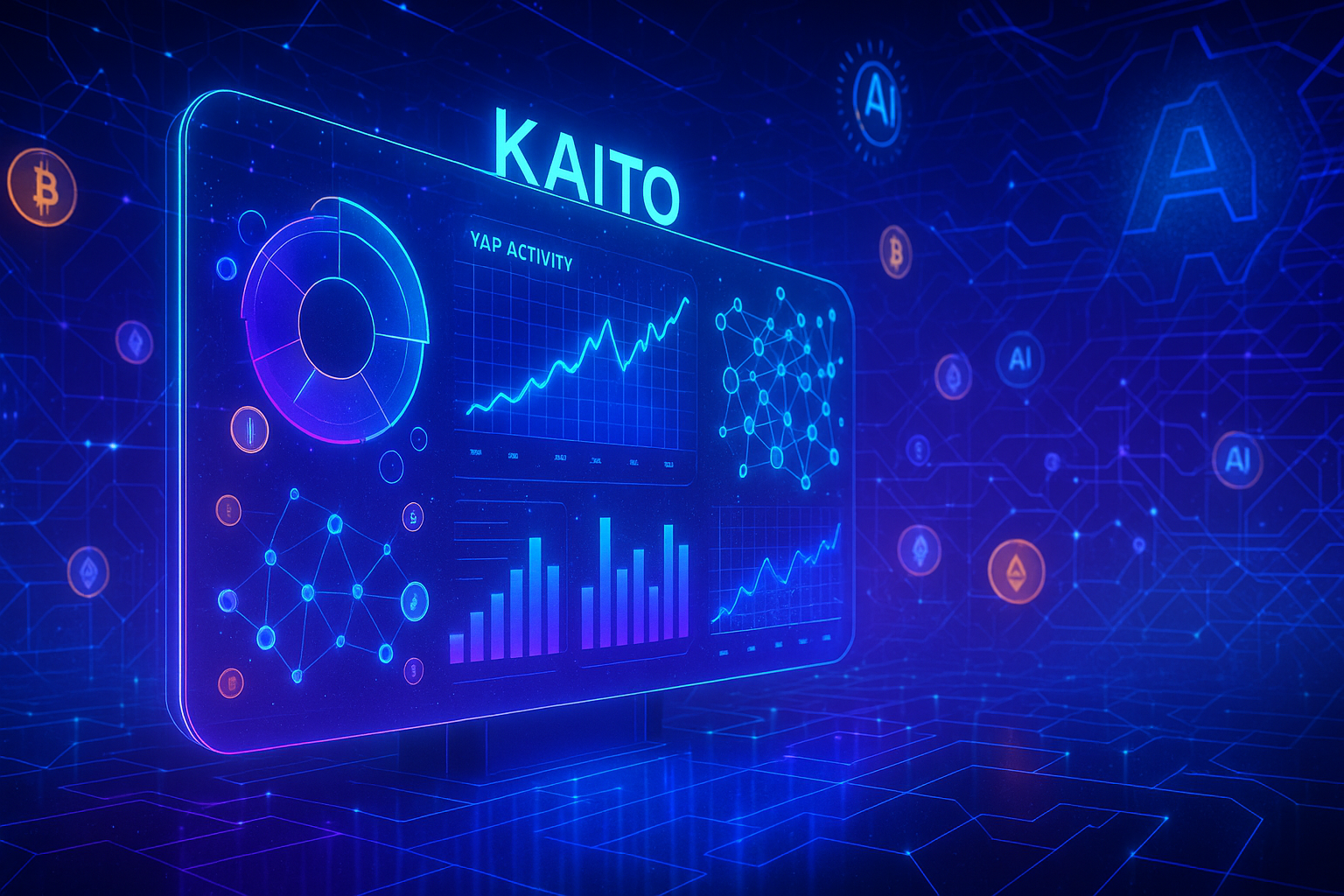
One of Kaito’s unique features is its “proof of influence” voting mechanism (via Yaps) and bidding/attention marketplace. Projects essentially compete for attention, and the community helps determine which projects receive visibility. In addition, analytics dashboards allow projects to track engagement, conversion, user sentiment, and adjust their strategy.
Impact: These mechanics enrich marketing by making it data‑driven rather than purely promotional. Projects can allocate resources to channels that show traction, focus on engaged segments, and optimize before the TGE. That means more efficient spend, stronger ROI, and a higher quality of participants.
Token Sale Performance: How Marketing Tactics Translate into Outcomes
Having laid out the tactics, how do they translate into performance metrics during the token sale and immediate post‑lab event? We can break this down into several key outcomes: oversubscription/fill rate, valuation/price performance, investor quality, distribution, and initial liquidity/trading behaviour.
Oversubscription and Velocity of Sale
When a project is well‑hyped and has pre‑built community momentum, the token sale fills faster and may oversubscribe. For example, Kaito Launchpad attracted multiple projects that sold out in a short time window: one project aggregated more than $71.5 million pledged from ~22,000 investors for a single sale. Fast fills and oversubscription send positive market signals and attract secondary investors/listing interest.
Valuation and Price Momentum
Because marketing boosts demand and signals credibility, projects may command higher valuations at sale and see stronger listing price performance. As an example, the $KAITO token itself surged as Kaito Launchpad activity spiked, with volume jumping over 1,200%. For projects, stronger marketing means more participants, more capital, and potentially better listing dynamics.
Quality of Investors and Token Distribution
Beyond just number of investors, marketing through engaged community channels helps attract participants who are aligned, informed, and likely to hold rather than “flip.” The emphasis on community, gamification, leaderboards, and analytics means that early supporters often become long‑term holders or advocates. This improves token distribution quality, which in turn enhances project sustainability and reduces early selling pressure.
Liquidity and Secondary Market Performance
While marketing and sale performance go hand in hand, what matters for long‑term health is the quality of liquidity and trading behaviour post‑sale. A well‑marketed launch tends to result in a robust community that supports trading, provides feedback, shares content, and participates in governance or staking. Projects that leverage Kaito’s post‑launch marketing tools can sustain interest and avoid the dreaded “sell‑off” window.
Post‑Launch Marketing & Community Growth
Token launch is just the beginning. A vibrant community and sustained adoption depend on ongoing marketing and engagement — and here’s where Kaito’s tactics continue to make an impact.
Sustaining Momentum with Engagement Tools
Post‑TGE, Kaito Launchpad encourages continuous engagement: airdrops, staking programs, gamified campaigns, community rewards, educational content. For instance, one article notes: “A successful token launch does not end with the TGE. Post‑launch marketing is essential to maintain interest, grow liquidity, and expand adoption.” Projects that utilise leaderboards, quizzes, content creation tasks, and exclusive perks for early supporters maintain a high engagement baseline.
Impact: Sustained engagement mitigates churn, keeps token holders invested, encourages word‑of‑mouth, and supports long‑term growth of the ecosystem around the token. A project with vibrant community activity also attracts further partnerships, listings, and integrations.
Analytics‑Driven Iteration & Feedback Loops
Continuing the earlier point on analytics, post‑launch marketing benefits from measurement, iteration, and optimization. Kaito’s built‑in analytics provide insight into community behaviour, drop‑off points, sentiment changes and channel performance. Projects can respond dynamically: when engagement dips, they can run a campaign; if new users are not converting to holders, they can adjust incentives; if certain channels are underperforming, they can reallocate. This adaptive marketing fosters healthier, more sustainable growth.
Security, Transparency & Credibility as Marketing Assets
In Web3, reputation matters. Many investors are wary of token launches due to past scams or weak projects. Kaito emphasises vetting, compliance, transparency – and projects can use this as marketing leverage. One source notes: “In an environment where scams … emphasising security and compliance becomes a strong marketing asset.” Projects that publicise audits, token‑lock details, vesting schedules, and partner validations as part of their marketing tend to build stronger trust, which helps community growth and retention.
Community Growth Through Incentives & Gamification
Gamification and incentive programmes remain powerful. Leaderboards, referral programs, content creation rewards, token‑staked access, etc., all feature in Kaito‑style marketing. For example, providing early whitelists to top contributors, offering tiered allocation based on engagement or activity, etc. This kind of structure turns community members into advocates, drives organic growth, and fosters word‑of‑mouth momentum.
Impact: When early adopters feel rewarded and empowered, they continue to promote the project, bring new members, and build a sense of ownership. Over time, the community is not only larger, but more resilient and active.
Strategic Considerations & Why It Matters
Putting these tactics into practice via Kaito Launchpad matters because of the strategic advantages and compounding effects.
Differentiation in a Crowded Market
The token‑launch space is crowded, noise is high. Projects that simply rely on pay‑for‑ads or scattergun promotion often fade. By using Kaito’s platform with its built‑in audience, voting mechanism, analytics, and community tools, a project can stand out, reach a curated‑investor segment, and achieve stronger retention. The earlier quote captures this: “You can’t just drop your token and hope for the best.”
Quality Over Quantity
Rather than chasing massive but shallow “followers”, these tactics emphasise engaged community. That helps ensure that tokens are not simply traded‑and‑dumped but are held, discussed, and supported. That in turn improves long‑term token performance, ecosystem health, and project credibility.
Marketing + Tokenomics + Platform Synergy
One of the strengths of Kaito’s marketing tactics is that they are closely aligned with tokenomics and platform mechanics. For example: marketing efforts highlight staking rights, governance incentives, unlock schedules; the platform emphasises analytics and community voting; and community retention is boosted by incentives and gamification. This synergy means marketing isn’t just noise—it communicates value, builds trust, and aligns investors’ interests.
Measurability and Optimization
In traditional Web3 launches, marketing is often a black box. With platforms like Kaito, you gain metrics: conversion rates, community growth, sentiment analysis, engagement rates, voting participation. That enables continuous improvement. More effective campaigns mean fewer wasted resources and better outcomes. The “most cost‑effective methods” article highlights this.
Ecosystem Network Effects
By launching on a platform like Kaito which already has an audience, influencer networks, partner channels, and track record, the project gains leverage. This network effect can manifest in faster fills, stronger secondary market interest, and more robust long‑term community growth. Also, since Kaito’s own token $KAITO benefits from launchpad activity (as seen by the price jump), projects can ride that momentum.
Case Study Highlights
Here are a few real‑world highlights demonstrating how these marketing tactics via Kaito are translating into impact.
One project on Kaito Launchpad tied to “Boundless” saw over US$71.5 million pledged from approximately 22,000 investors.
The platform reported reaching the US$170 million pledged allocations milestone.
In another case, a project called “Limitless (LMTS)” running on Kaito Launchpad leveraged a tier‑based allocation system tied to community engagement: Tier 1 core users first priority, then Tier 2 broader community.
These outcomes illustrate how the combination of marketing + platform mechanics + community tools can lead to brisk token sale performance and strong foundational community growth.
Best Practices for Projects Using Kaito Launchpad Marketing
If you’re running or planning a token launch on Kaito (or a similar platform), here are distilled best practices based on the above:
Start Early & Build Awareness – Begin pre‑launch campaigns well before TGE. Use teasers, countdowns, early‑access previews, and engage the audience with your story.
Cultivate Community Engagement – Use Telegram/Discord, host AMAs, run challenges, reward early supporters, and integrate with Kaito’s community tools like leaderboards or Yaps.
Leverage Influencers & Partnerships Strategically – Don’t just buy shout‑outs; collaborate with influencers who align with your token’s narrative, host joint events, and create shared value.
Align Tokenomics with Messaging – Make sure your marketing emphasises the value proposition, staking/usage/governance utility of the token. Use clear, accessible language.
Use Platform Analytics to Optimize – Track engagement, conversion, community sentiment. Reallocate marketing resources where you see traction.
Execute the Sale with Precision – Choose an optimal launch window, coordinate communications, ensure transparency on unlocks, vesting, liquidity. Use Kaito’s built‑in infrastructure to manage attention and allocation.
Maintain Post‑Launch Engagement – The journey continues after TGE: reward holders, run staking/gamification programs, publish regular updates, involve community in governance and roadmap decisions.
Promote Credibility and Transparency – Publicise audits, token‑lock details, team commitments, regulatory compliance – this builds trust and aligns with the marketing narrative.
Foster Organic Growth & Advocacy – Transform early community members into advocates; provide incentives for referrals, content creation, and community evangelism.
Avoid Marketing as a One‑Off Event – Sustain your momentum. Use post‑launch campaigns, partnerships, content creation, ecosystem integrations. Marketing for token launches is a marathon, not a sprint.
Common Pitfalls & How Marketing via Kaito Helps Mitigate Them
Even with strong tactics, token launches face risks and pitfalls. Here’s how Kaito‑style marketing helps address them.
Pitfall: Launch without community → low uptake, high sell‑off.
Solution: The community‑building tools of Kaito ensure that a meaningful base of supporters is in place.Pitfall: Weak marketing → poor visibility, weak token sale.
Solution: Kaito integrates with influencer networks, has built‑in launch audiences and analytics to support visibility.Pitfall: Poor token distribution → whales dominate, unsustainable market behaviour.
Solution: Marketing tactics that reward engagement, tiered allocation, gamification help achieve more balanced distribution (as seen in the LMTS case).Pitfall: Post‑launch inactivity → community dies off, token stagnates.
Solution: The post‑launch support and engagement strategies built into the platform help maintain momentum.Pitfall: Lack of credibility → investors skeptical, drop off quickly.
Solution: Marketing that emphasises transparency, audits, tokenomics coupled with platform trust helps overcome credibility hurdles.
How Community Growth Drives Long‑Term Token Value
It is worth emphasising that in the Web3 era, community isn’t a “nice to have” — it is a core asset. The marketing tactics deployed on platforms like Kaito not only boost short‑term sale performance but also underpin long‑term value creation.
A vibrant community of engaged token holders does several things:
It sustains liquidity by keeping tokens in circulation and trading.
It amplifies word‑of‑mouth marketing, thereby attracting new users and investors without large incremental spend.
It participates in governance, staking, ecosystem use‑cases, which reinforces token utility and reduces speculative churn.
It creates network effects: active users invite others, content is generated, the token/brand becomes more resilient.
Therefore the impact of the marketing tactics discussed is not only immediate but compounding. Early investment in awareness, engagement, analytics, and alignment yields far greater returns when the community becomes self‑sustaining.
Conclusion
The dynamics of token launches in Web3 have evolved: success is no longer just about raising capital, but about building an ecosystem of engaged users, aligning tokenomics with narrative, executing at speed, and sustaining growth. The Kaito Launchpad encapsulates many of the features that modern launches require — from built‑in audience and voting mechanisms, to analytics and community tools, to post‑launch marketing support.
Projects that leverage Kaito’s marketing tactics effectively can expect improved token‑sale metrics (faster fills, higher valuations, stronger investor quality), healthier token distribution, and stronger community growth and retention. These outcomes combine to enhance long‑term value creation, not just for the project and token holders, but for the broader ecosystem.
















Write a comment ...